Thursday, September 27, 2012

How to Fix a Hand


It is a known fact  that one-third of all acute injuries happen in the upper extremities of the body.  The most common fractures occur in fingers, mostly because of sports-related injuries. The hand is a very complex and important area of the body which has 27 different bones and 34 muscles that work jointly to perform even simple motions. When pain occurs, a lack of normal function can make the performance of daily tasks and activities difficult.
 Arthritis, tendinitis, carpal tunnel syndrome, and Dupuytren’s disease are common hand conditions that patients will be diagnosed with. These conditions can result from lifestyle, age,  and occupation. In athletic sport, sprains and fractures  are frequently seen in the fingers and hand. The components of this area of the body work together as one, but when a injuryor dysfunction  arise, the whole hand is affected.
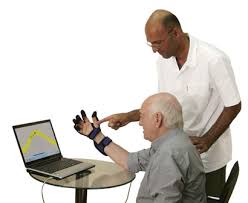
 When a hand, arm, elbow or other upper limb suffers an injury or surgery that incapacitates it and physical therapy is indicated the most effective physical therapy solution should be brought into play. Such a product is the TUTOR system. Specifically the HANDTUTOR and
its sister devices ( ARMTUTOR, LEGTUTOR and 3DTUTOR) which  have been developed to teach children and adults how to reuse their joints after hand and wrist injuries such as trauma or stroke, brain and spinal cord injuries, CP, MS, Complex Regional Pain Syndrome and a host of other serious debilitating diseases that affect hand, wrist and arm movement ability.
 These can be treated with the HANDTUTOR and the ARMTUTOR. The unique and successful physical therapy products use a dedicated software that utilizes games to enhance and improve the patient’s functional movement ability by motivating the patient to do intensive movement practice which is the key element in an occupational and physical therapist‘s treatment of movement impairments. The games, such as, Car Race, Snowball, Catch The Ball, Sky Defender and others captivate and motivate the child and even the adult to excel and thereby to improve their range of motion and general use of the hand or wrist. The TUTORS  use tele rehabilitation for those patients that are home bound or who have recovered sufficiently to get their treatment at home. Leading U.S. and European hospitals and outpatient clinics now use the TUTORs which are fully certified by the FDA and CE. See WWW.MEDITOUCH.CO.IL for more information.

Sunday, September 23, 2012

Who Benefits More From Total Knee Replacement Surgery?


A study was published on August 6, 2012 in the journal ”Osteoarthritis and Cartilage”. One of the conclusions drawn from the study was that if someone  has knee osteoarthritis, steps can be taken to prevent permanent damage. For those with the damage done, it will be necessary to undergojoint replacement surgery to relieve pain and boost knee function.
Furthermore the study showed that osteoarthritis patients that had the most joint damage before surgery would be the most likely to benefit fromtotal knee replacement and were least likely to have major pain one year after the surgery.
Michelle Dowsey, PhD, of the University of Melbourne, and her colleagues wanted to know how patients with different levels of  damage responded to total knee replacement surgery. (478 osteoarthritis patients were used in the study).
It was found that  about 30 percent of patients did not get sufficient pain relief and about 50 percent of patients did not regain enough function.
The researchers placed patients  in groups according to their level of damage.
Patients with the least  damage were over five times more likely than those with the most damage to continue feeling moderate or severe pain one year after surgery.
Compared to patients that had the most damage, those with less damage were almost three times more likely to have poor function one year after their surgery.
For the most part, higher levels of damage before surgery were associated with greater pain relief and improved function.
The study was graded according to the Kellgren-Lawrence Grading Scale – which is used for rating joint damage in osteoarthritis.  Grade 1 marks the least damage and Grade 4 marks the most.
Following knee replacement surgery, improvement is accomplished with the  proper physical therapy solutions. One of the most effective products now available for this condition is the LEGTUTOR.
 The LEGTUTOR is an ergonomic wearable leg brace with dedicated rehabilitation software.  The LEGTUTOR  concept is based on performing controlled exercise rehabilitation practice at a patient customized level with real time accurate feedback on the patient’s performance. This means that the LEGTUTOR system allows the physical therapist to prescribe a leg rehabilitation program customized to the patient’s knee and hip movement ability at their personal stage  of rehabilitation. The LEGTUTOR uses biofeedback to keep the patient motivated to do the exercise practice with what was designed for them in the form of challenging games. The LEGTUTOR and its sister devices (HANDTUTOR, ARMTUTOR and 3DTUTOR) are suitable for a wide variety of other neurological and orthopedic injuries and diseases as well as post trauma and orthopedic surgery.
 The LEGTUTOR is also used by physical and occupational therapists  for upper and lower extremity rehabilitation. The TUTOR system is used by many leading rehabilitation centers worldwide and has full FDA and CE certification. It is designed for children and adults and can be used at home supported by telerehabilitation. See WWW.MEDITOUCH.CO.IL for more information.

Friday, September 21, 2012

Before and After Traumatic Brain Injury


Aside from physical debilitation  one wonders how different life can be for someone that has suffered a TBI one year later. Drs. EK Wise , C. Mathews-Dalton etal conducted a survey about the impact of traumatic brain injury on participation in leisure activities.
Participants in the survey were rehabilitation inpatients whose mean age was 35.3 years. 77% of them were male and 77% of them were white. All of them had moderate to severe TBI.
 One year after the injury, 81% had not returned to where they were preinjury with leisure participation. The activities most of them  discontinued included  drug and alcohol use, partying,  and  sports activities. Watching television became the new leisure activity for most of them. A small percentage returned to those activities within 4 months of the injury. About sixty percent of those who didn’t return to their preinjury levels were somewhat  bothered by the changes.
The conclusions that the researchers reached was that after one year from the initial injury, most TBI survivors engaged in fewer leisure activities than before. The activities they did join were more sedentary and less social and they were not satisfied  with these changes. Considering which activities they participated in before (as above)  discontinuing them may be considered as a positive change, but there were few new ones to replace them.
Many TBI patients, unfortunately suffer permanent physical damage but for those who have not the plan of action would be to work at regaining their former strengths and abilities. This can be done with vigorous activities and exercise. In considering which physical therapysolutions to use the most effective products and devices should be considered. The TUTOR system is one of those.
The recently developed HANDTUTOR and its sister devices (ARMTUTOR, LEGTUTOR and 3DTUTOR) have become a key system in neuromuscular rehabilitation for stroke victims and those recovering from brain and spinal injuries, Parkinson’s, MS, CP and other limbmovement limitations. These innovative physical therapy products implement an impairment based program with augmented motion feedback that encourages motor learning through intensive active exercises and movement practice. The HANDTUTOR, ARMTUTOR, LEGTUTOR and 3DTUTOR consist of wearable gloves and braces that detect limb movement showing the patient how much active or assisted active movement they are actually doing. The rehabilitation software uses special rehabilitation games to set a new target for this movement in terms of the patient’s ability to move their affected limb. The devices then measure the limb movement and give feedback on the success of the patient in trying to gain this new movement objective.  In this  way the TUTOR system provides exercises that are challenging and motivating and allow for repetitive and intensive exercise practice.
The TUTOR system can also be used in the patient’s home through telerehabilitation and is now part of the rehabilitation program of leading U.S. German, Italian, French, UK and other foreign hospitals and are fully certified by the FDA and CE. See WWW.MEDITOUCH.CO.IL for more information.

Thursday, September 20, 2012

Do’s and Don’ts Before and After Knee or Hip Surgery


Preferably a person who may need to undergo a knee or hip replacement  should attempt to avoid the surgery by incorporating into his life several methods of exercise. However if that is not possible or it hasn’t alleviated the situation and surgery becomes necessary there are a number of preparations that should be followed before and after the surgery.
Before surgery:
  1. Increase liquid intake: Water and other liquids are necessary to repair any muscles or tissues that may be damaged during surgery. This should be done as far in advance as possible by drinking plenty of water.
  2. Proper movement: Getting a  physical therapist or other professional before the surgery to help you establish patterns of movement that will properly align your body before and after surgery is highly advisable. They can assist you in strengthening and balancing the muscles around the affected area, easing the recovery.
  3. Proper eating:  find out what foods are better that can help  metabolic healing. For example:  garlic added  to food can be helpful because it has balanced amino acids and anti-inflammatory properties. Additional information can be found at www.nutritiondata.com.
  4. Sufficient rest: Enough rest is important anytime you change a routine as well as helping to  repair damaged muscle and tissue. Rest can also reinforce healthy muscles and tissues.
  5. Avoid stress: Stress can alter everything about you. Seek to relieve all sources of stress at work or in the home or with family responsibilities. Prepare the home for post surgery. i.e. if you normally sleep in an upstairs bedroom arrange for sleeping on the lower level as you will not be able to negotiate stairs for a while.
After  surgery:
  1. Continue to drink plenty of water.
  2. Only move according to instructions and limitations given to you by the professionals. Don’t overdo it. Submit to all the physical therapy sessions you are advised to attend and do what you are instructed. Get enough therapy to return you to a normal state even if you have to find additional professionals to do so.Don’t stop too soon.
  3. Continue the healing diet.
  4. Get even more rest and sleep than before. This is necessary for proper healing.
  5. Get any help necessary to conduct your home life as you are used to i.e. not doing laundry etc.You may not be able to predict everything you need beforehand.
Above all stop using the new joint in the way that you did the old one as that is what got you into this situation in the first place. If not the same problem may reoccur.
During pre and post surgery rehabilitation it would be very helpful to use the best physical therapy solutions available such as the TUTOR system. The LEGTUTOR and 3DTUTOR are 2 physical therapy products designed to do just that.
The LEGTUTOR consists of a safe comfortable leg brace with position and speed sensors that precisely record three dimensional hip and knee movements. The LEGTUTOR has a a range of motion limiter that can limit the dynamic range of knee extension and flexion. Rehabilitation games allow the patient to exercise Range of Motion, speed and accuracy of movement. The LEGTUTOR facilitates evaluation and treatment of the lower extremity including isolated and combined hip and knee movements.
The 3DTUTOR can be used alone or in combination with the  LEGTUTOR to exercise additional interjoint coordination movements. The 3DTUTOR is a wireless motion feedback device that can be positioned on discreet joints of various parts of the body including lower extremities. This allows for evaluation and treatment of the joint of choice.
The TUTOR system is currently in use in leading U.S. and European hospitals and clinics and can be used by children as young as 5 as well as by adults. The TUTORs can also be used at home through telerehabilitation affording a patient who underwent knee or hip surgery to avail himself of intensive exercises without returning to the clinic.
The TUTORs are fully certified by he FDA and CE. See WWW.MEDITOUCH.CO.IL for further information.

Wednesday, September 12, 2012

Important Definitions for Rehabilitation Patients and Professionals to Know


When discussing physical and emotional well-being, rehabilitation refers to a process that  restores to the patient  a previous level of health. There may be a process to restore at least some function to a damaged limb or by a  process of education  equip the individual to learn how to compensate for damage that is beyond repair. Basically, rehabilitation’s  goal is to assist  individuals to achieve the highest quality of life and health that is possible depending on their circumstances. Physical therapy normally consists of a mixture of movements and exercises to offer pain relief caused by chronic illness, injury or disease. The following list will also give some ideas to those wishing to enter the field of therapy as a profession.
Physical therapy rehabilitation is  this restoring process. It is used usually after major surgery, an accident, or disease that keeps the individual from full mobility or function. In this form of rehab the patient is treated by  trained personnel who assist him to retrieve as much of his former physical strength as possible. Sometimes the physical therapy is used to strengthen healed limbs and now need exercise and in some cases it is used to teach patients how to compensate for a lost movement or limb using others that remain.
Physical Therapy Clinics may perform pain management, massage therapy, occupational therapy and even sports and speech therapy. For potential therapists it is advised that one volunteers in such a clinic first to see what results can be achieved after graduation.
Physical Therapy Facilities: A person who is considering a career in physical therapy is advised to visit a rehab facility to determine if this work is suited for them.
 Four points should be considered before choosing a physical therapy graduate school: graduate programs, accreditation, admissions requirements,  and the faculty. Usually a PT graduate school is part of a university faculty of medicine.
Stroke Rehabilitation Physical Therapy: Here the exercises are  used to assess how severe  the brain damage is.  The patient will have an opportunity to relearn various activities such as eating, walking, bathing, speaking or dressing.
Here also the future therapist  will learn about new developments in science and technology in relation to a physical therapy career. This may include, for example, learning how to deal with trauma victims or children born with physical impairments. They can also observe how new state of the art devices are used.
Physical rehabilitation centers have professional counselors to monitor patients’ mental health and encourage them to  overcome difficult circumstances.  Physical rehabilitation centers cater to patients with all types of debilitating conditions, from paralysis to neurological problems to broken body parts. Some people come here to receive outpatientservices.
Physical therapy  supplies can include devices that perform electrical stimulation, or ultrasound on patients. A physical therapy assistant may be answering phones, ordering supplies, and filling out insurance paperwork.
Physical Therapy Courses: A potential therapist should expect classes on biology, functional anatomy and physiology, kinesiology, physical therapy methods, and rehabilitation psychology.
A well equipped physical therapy facility will include the most efficient physical therapy products available. These would include the TUTOR  system. The TUTORs include the HANDTUTOR, ARMTUTOR, LEGTUTOR and 3 DTUTOR which are used to provide intensive exercises to patients that had a stroke, brain/spinal cord injury, an upper or lower limb surgery or that have had debilitating diseases. The TUTORs are ergonomically designed gloves or braces that have sensors connected o dedicated software. The patient, on his own initiative, will move his affected limb by playing exclusive computerized games. Physical therapists then record and evaluate these movements and design an exclusive exercise program for that patient.
The TUTORs are in current use in leading U.S. and European rehabilitation hospitals and clinics. They are fully certified by the FDA and CE. They are available for children and adults and can be used in the patient’s home through telerehabilitation.
See WWW.MEDITOUCH.CO.IL for further information.

Monday, September 10, 2012

Gaming Therapy New Innovations


LISA D. MICKEY reporting in the New York Times on September 8, 2012 tells how in the world of health care, Nintendo  golf is not only a high-tech toy but also a tool in  occupational, neurological and physical rehabilitation.
“It is similar to what we do in physical therapy,” said Dean Beasley, who is the director of inpatient rehabilitation at Doctors Hospital, Augusta, Ga. “The Nintendo allows the patient to practice what they’ve done in therapy and also lets them know they can still play golf.”
Patients recovering from brain injuries or strokes are always concerned about their balance and movement while others want to improve their range of motion and in general their gross motor function like walking and lifting. This helps them do it. The Wii golf inserts an element of pleasure in an otherwise sometimes painful therapy. Patients who previously played golf have a greater motivation to use this form of physical therapy.
The electronic system includes a motion sensitive wand and animated screens that contain holes in a golf course.
Getting the patients to make certain movements is much easier for the therapist with this simulated golf game. In addition it gives the patient the ability to control balance and maintain coordination. Adaptations of this system now include other games such as bowling, tennis and baseball. Some patients have even been able to play from a wheelchair sitting position. Using this system has had the side effect of making the patient less dependent on the therapist in improving balance as well as helping him stay active.
Patients receive immediate feedback as to their progress in motor skills, balance and coordination and don’t think of it as exercise.
Perhaps one of the most important results of using the Wii Nintendo system is that the patient recovery time has been shortened. Some patients actually request more time than what they were otherwise required to do. In the Kaiser Permanente neurological physical therapy program some patients have actually purchased the game for home use which will just enhance and speed up their recovery.
The Wii golf game system of physical therapy for stroke or brain injury victims joins other physical therapy solutions that have been in existence for some time already such as the TUTOR system. The HANDTUTOR, ARMTUTOR, LEGTUTOR and 3DTUTOR utilize an exciting and exclusive series of games such as snowman, ball, car race, bubbles and volley ball, amongst others, to allow the patient to control his balance and give him a greater range of motion. The TUTORs  consist of motion sensitive gloves and braces that allow the physical therapist to monitor the patient’s progress and then design a customized and realistic plan for that patient. This fun way of achieving limb movement improvement has reduced the time that patients need to get the therapy they require much more so than with the traditional and sometimes monotonous therapy.
The TUTORs are  fully certified by the FDA and CE; are available for children as young as 5 and can also be used at home through the use of telerehabilitation. See WWW.MEDITOUCH.CO.IL for further information.

Thursday, September 6, 2012

Proper Rehabilitation Can Produce Better Social Outcomes


Social outcomes in rehabilitation therapy should be included in the practice and research results of rehabilitation therapy.
For example. In a recent study forty-four young adults, admitted to a rehabilitation center after a very severe head injury, were examined 2 years after their accident. In a comparison with a control group it showed that the head injured had experienced significant changes in family life, work, leisure activities and contact with friends. Even though there were still changes that created problems, most of the patients and their relatives appeared to have made a number of successful adaptations to their altered situation. Neurophysical status, personality change and memory loss all affected work capacity, while presence of personality changes was especially important because of the loss of pre-accident friendships.
Normally there are no significant social differences between age groups but when comparing ”young” older aged people (60, 70) with ”old” older (80, 90) aged people differences were seen. In the younger group more alcohol abuse was found and in the older group more lack of cognitive skills was noticed. On the other hand, despite the alcohol abuse the younger group showed better physical recovery.
In another example chronic and disabling diseases like multiple sclerosis, rehabilitation becomes of major importance in the preservation of psychological, physical, and social functioning. About 80% of MS patients have the disease for more than 35 years and most will develop a disability at some point in their lives. This emphasizes the importance of rehabilitation in order to maintain a reasonable quality of life. Probably the most important aspect of multiple sclerosis rehabilitation is the preservation of physical functioning. A hot topic in the rehabilitation of physical function of MS patients includes exercise therapy. Exercise therapy has for many years been a controversial issue in multiple sclerosis rehabilitation and the advice generally given to those patients was not to participate in physical exercise, since it was thought to lead to a worsening of symptoms or fatigue. However, a major shift has taken place and it is now increasingly acknowledged that exercise therapy is both safe and beneficial.
Because physical functioning is so vital, not only in achieving some return to normalcy in limb movement, following a stroke, brain injury or any other serious medical condition, but also because it is imperative to reduce aspects of a negative social repercussion, therefore the best available physical therapy solutions should be found. Nowadays the TUTOR system is in the forefront of physical therapy products and therefore it is in use in leading U.S. and European rehabilitation hospitals and clinics.
The TUTORs (HANDTUTOR, ARMTUTOR, LEGTUTOR and 3DTUTOR) are recently created devices that consist of comfortable, ergonomically designed gloves and braces that contain sensors that pick up even small movements that are self initiated by the patient. The patient is subjected to dedicated and sophisticated software containing rehabilitation games. Physical and occupational therapists then record and evaluate the movements made and customize an intensive exercise program for that patient. The rehabilitation system optimizes the patient’s motor, sensory and cognitive performance and allows him to better perform everyday functions to improve his quality of life. In this way there will be a more favorable social outcome with minimal damage occurring.
The TUTORs are available for children as young as 5 and can be used at the patient’s home through telerehabilitation. They are fully certified by the FDA and CE.
See WWW.MEDITOUCH.CO.IL for further information.